Local · 16 October 2026
Bridal makeup for Amritsar weddings: Golden Temple visits, venue light and timing
Planning bridal makeup for an Amritsar wedding? How a Sri Harmandir Sahib visit, GT Road travel and local venue light should shape your artist's timeline.
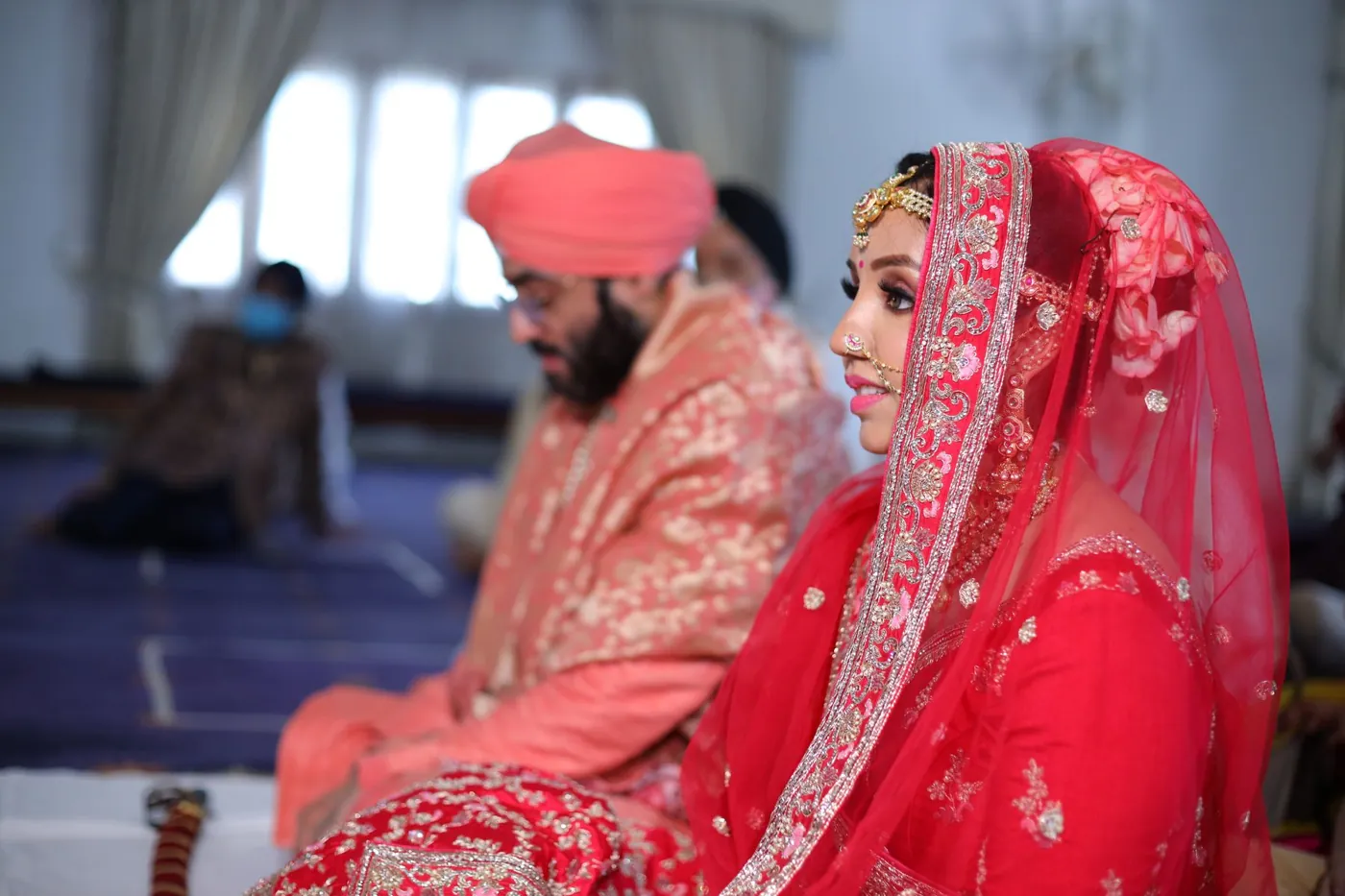
Amritsar weddings carry a weight that’s different from a city wedding elsewhere in Punjab. For a lot of families, the day genuinely starts at Sri Harmandir Sahib — a quiet darshan before the noise and colour of the baraat, the Anand Karaj and the reception take over. Planning bridal makeup around that morning, plus Amritsar’s own mix of venues and GT Road travel, needs a slightly different timeline than a standard wedding-day plan.
Why the Golden Temple visit changes the morning
If your family is visiting Sri Harmandir Sahib before the main ceremony — whether for a quiet family darshan or as part of the day’s ritual flow — your makeup can’t be done once and left alone. The visit usually means:
- Walking on stone courtyards, often in direct sun through the late morning, which calls for a sweat- and humidity-resistant base rather than a heavy one that will need fixing the moment you’re back.
- Covering your head with a chunni or dupatta, which can disturb hairstyling if it’s built for the final look rather than a “travel-ready” first stage.
- A gap of an hour or more between the temple visit and the actual Anand Karaj, during which the fuller bridal face, eyes, chooda and kaleere are completed.
The honest approach is to treat it as two makeup stages, not one: a lighter, long-wear base and simple hair for the temple, then the complete bridal look built up once you’re back at the venue. This is worth discussing with your artist weeks ahead, not on the morning itself, so the timeline has the extra hour built in rather than squeezed out of the ceremony schedule.
Amritsar’s venue mix
Amritsar weddings tend to split between a few venue types, each with its own lighting character:
- City banquet halls and hotel lawns, particularly around the Mall Road and GT Road belt, where warm indoor lighting for the evening functions needs a base built for close-up video and photography, not just how it looks in the mirror.
- Farmhouse and lawn venues on the outskirts, popular for sangeet and reception events, where daytime sun calls for a different setting routine than the evening’s string-light glow a few hours later.
- Heritage-style properties, which often have lower, more atmospheric lighting through the older sections — worth mentioning to your artist in advance so contouring and base shade are built for that light rather than daylight.
If you haven’t settled on your event-by-event look yet, our packages page breaks down what a multi-function booking typically covers, so each event’s technique can be planned ahead rather than decided on the spot.
Timing around GT Road and the city’s wedding season
The second Amritsar-specific factor is travel — both for an outstation artist coming in from Jalandhar and for guests arriving from Delhi, Chandigarh or further afield for a big city wedding:
- Build buffer time into the morning schedule for GT Road traffic, especially during October–February wedding season weekends when multiple events compete for the same roads and hotel parking.
- If the baraat or Anand Karaj has a fixed muhurat time, work backwards from it with at least 30–45 minutes of slack, more if a temple visit is part of the morning.
- Confirm your venue’s vendor entry and parking rules ahead of time — several Amritsar banquet and lawn properties run tighter logistics during peak wedding months.
A realistic day-of sequence
For a wedding day that includes a Sri Harmandir Sahib visit, a workable sequence usually looks like this:
- Light base, simple hair for the temple visit, kept long-wear and minimal since it will sit under a chunni in the heat.
- Return to the venue, where the face is rebuilt and intensified for the main ceremony and photographs.
- Chooda, kaleere and jewellery go on last, once the full face and hair are set, so they stay fresh for the Anand Karaj and laavan.
- A touch-up kit travels with you between the morning visit, the ceremony and the reception, since Amritsar’s day often spans more locations than a single-venue wedding elsewhere in Punjab.
The honest bottom line
Amritsar doesn’t call for a different makeup technique so much as a different plan — one that respects the morning’s temple visit, accounts for the city’s real venue lighting, and leaves enough room in the schedule for GT Road traffic during wedding season. An artist who asks about your morning plans before your lehenga colour is the one who’ll get your timeline right.
If you’re planning an Amritsar wedding and want a schedule built around your actual morning, venue and events, reach out on WhatsApp through our contact page and we’ll plan it with you.
Questions brides ask about this
Do you travel to Amritsar for weddings?
Yes. We travel from Jalandhar along GT Road for Amritsar weddings with the full team — makeup, hair and draping. See /areas/amritsar/ for details on how we plan bookings in the city.
Should my makeup be lighter if we're visiting Sri Harmandir Sahib before the wedding?
Yes, usually in two stages. A softer, long-wear base for the darshan itself — since you'll be walking, covering your head and possibly out in the sun — followed by the fuller bridal look built up afterwards once you're back at the venue for the main ceremony and photographs.
How early should I book an outstation artist for an Amritsar wedding?
Book as soon as your date and venue are fixed, especially for the October to February wedding season. Outstation artists typically hold one wedding per date, and good dates for Amritsar weekends fill up quickly.
Does the choora and kaleere draping happen before or after the temple visit?
Usually after. Chooda and kaleere are tied for the wedding ceremony itself, so if the morning includes a gurdwara visit first, we plan the draping and jewellery for once you're back and ready for the Anand Karaj.