Trends · 4 October 2026
Bridal makeup trends for Punjab weddings in 2026–27: what's actually changing
What Punjabi brides are genuinely asking for this wedding season — skin-first bases, softer colour, bigger hair moments — and what is just an Instagram trend to skip.
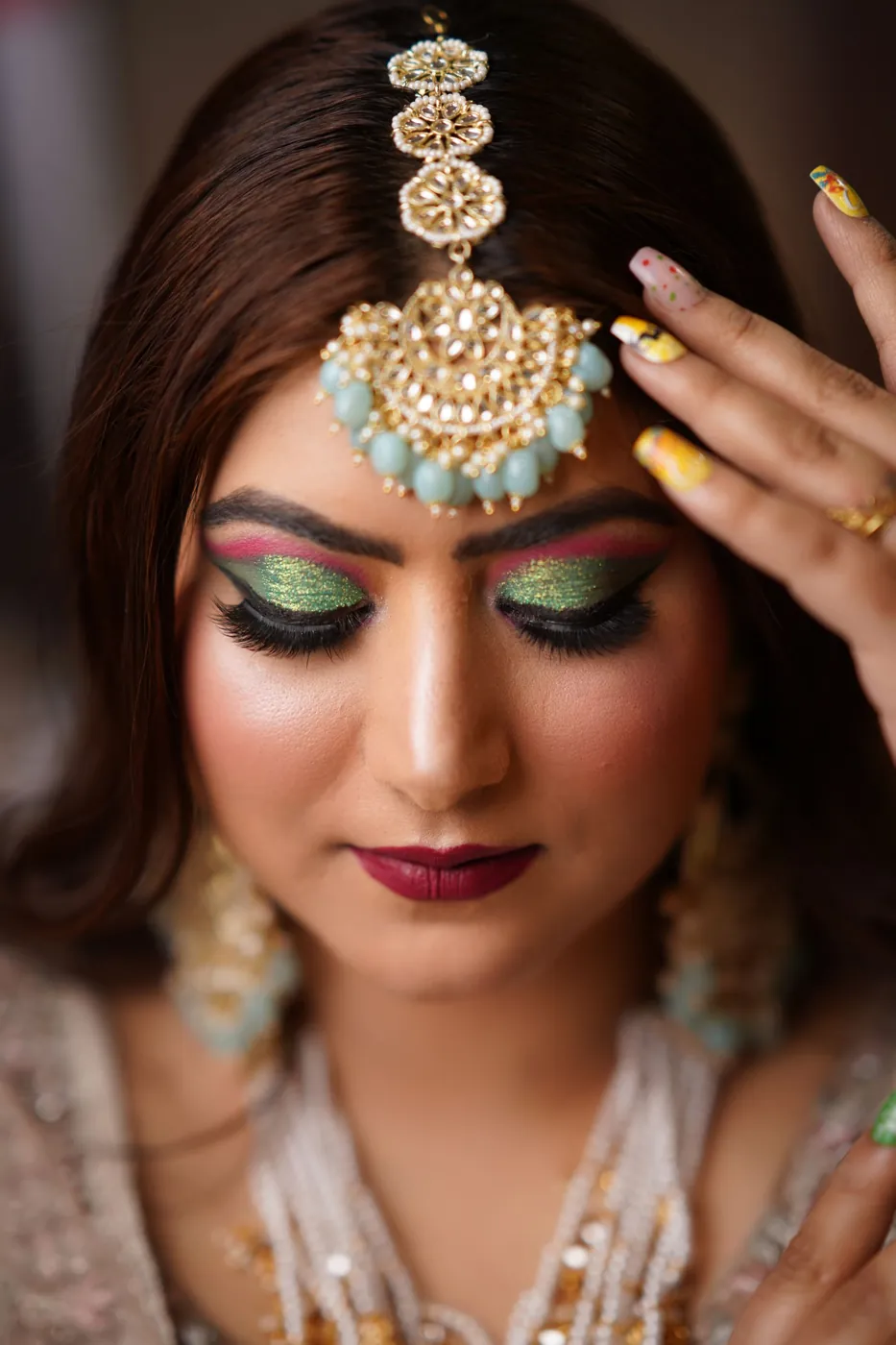
Every October, as the wedding season bookings start coming in for Jalandhar, Chandigarh, Ludhiana and Amritsar functions, we get the same question at the studio: “What’s trending this year?” Here’s an honest answer — what we’re actually seeing requested at trials, and what’s more Instagram noise than anything brides want on their own wedding day.
Skin-first base, not flat HD
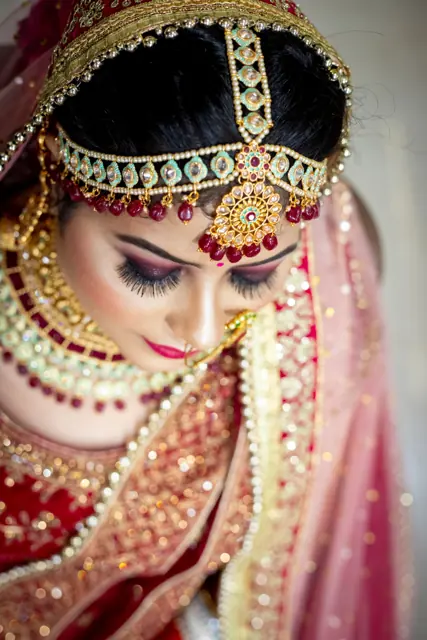
The biggest real shift is away from a fully matte, poreless HD base towards something that still photographs well under flash but looks like skin up close. Brides want their face to move naturally when they laugh during the laavan or get emotional during the vidaai, instead of sitting like a mask. This doesn’t mean less coverage — Punjab weddings in October and November still mean long days, humidity swings, and camera flashes at night functions — it means better skin prep underneath so less product is needed on top. We still lean on HD vs airbrush decisions case by case, because venue lighting and your skin type still decide more than any trend does.
Soft, intentional colour over heavy default eyes
For a few years the default bridal eye was a wine or copper smoky, applied heavily regardless of outfit. What we’re seeing requested more now is colour chosen specifically to the lehenga or outfit’s shade and the jewellery — a terracotta eye with a rani pink lehenga, a soft bronze with ivory and gold, a deeper plum reserved only for night pheras under mandap lighting. The eye is still a statement, but it’s a considered one, not a copy-paste. If your outfit colour is already decided, bring a photo to the trial and we’ll build from there rather than from a generic “bridal smoky eye” template.
Bigger hair moments, especially for sangeet and jaggo
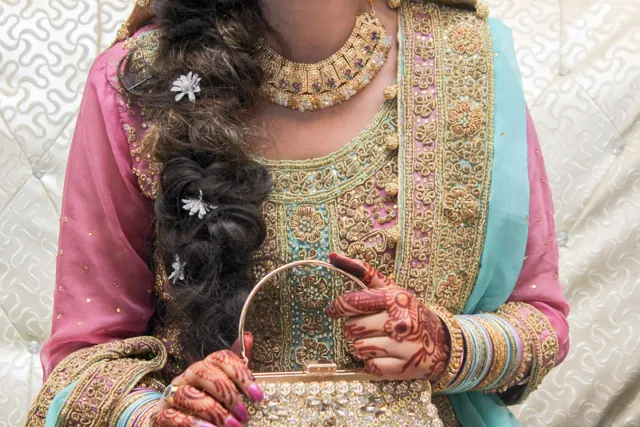
Hair is where brides are experimenting the most right now. Sleek low buns are still requested for the Anand Karaj under a chunni, but for sangeet, jaggo night and reception we’re getting far more requests for volume — braided crowns, floral tucked into a side braid, a loose wave with a statement maang tikka worn slightly off-centre. Part of this is practical: giddha and bhangra at a sangeet move a hairstyle in ways a seated ceremony doesn’t, so styles are chosen to survive dancing, not just photograph well standing still.
Multiple looks instead of one “big” look
Fewer brides want to look identical at the roka, mehndi, Anand Karaj and reception. The trend is toward each function having its own coherent but connected look — a soft daytime glow for sagan and mehndi, the full bridal look for the ceremony itself, and something sharper or smokier for the reception. If you’re mapping this out, our bridal makeup page breaks down how looks typically shift across a full Punjabi wedding timeline, and our packages page shows how multi-function bookings are usually structured.
Chooda and kaleere treated as part of the styling, not an accessory
More brides are asking us to coordinate hand and wrist styling — nail shade, mehndi placement, and how the chooda and kaleere sit — with the overall palette rather than treating them separately. It’s a small shift but it shows in photos, especially in the close-up ring and hand shots every photographer takes during the pheras.
Grooms are asking for more too
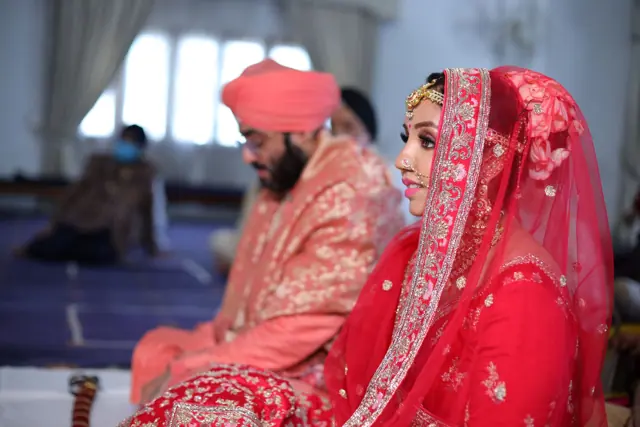
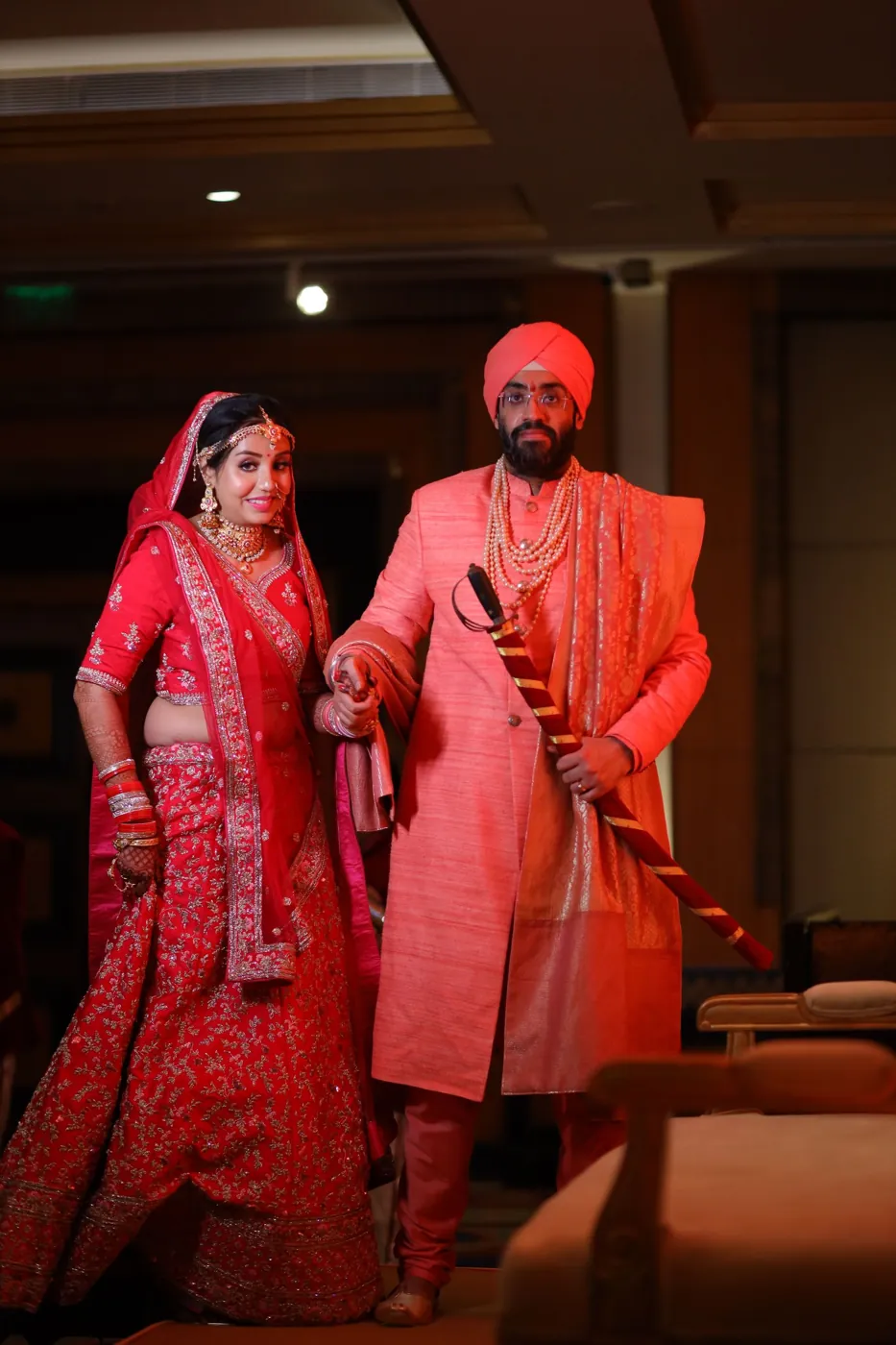
It isn’t only brides. We’re seeing more grooms request proper skin prep before the wedding rather than a last-minute shave, and more interest in a defined but natural beard line for photos — particularly for the sehra bandi and baraat, where the groom is photographed as much as the bride for those first twenty minutes.
What to actually skip
A few things trend online every season that we’d gently steer most Punjab brides away from: heavy contouring that doesn’t match October daylight or gurdwara lighting, lash sets so dramatic they don’t suit eye shape, and copying a look wholesale from a celebrity or influencer without accounting for your own skin tone and face shape. A trend photographed well on someone else’s face under studio lighting at 2 pm doesn’t always survive a 6 am Anand Karaj start in Jalandhar winter fog.
How we use trends at the trial
We treat all of the above as a conversation starter, not a brief. At your trial we look at your skin, your outfit, your jewellery and your venue, and build toward something that borrows what suits you from what’s trending this year and leaves out what doesn’t. If you’re currently narrowing down your own look for a 2026 or 2027 wedding, message us on WhatsApp through our contact page and we’ll talk you through what would actually work for your dates and venues.
Questions brides ask about this
Is HD makeup still the most requested finish for 2026 weddings?
It's still popular for the Anand Karaj and reception, but more brides are asking for a skin-first, slightly dewy base rather than a fully matte HD finish — see our guide to HD vs airbrush to understand what suits your skin and venue.
Are bold, heavy eyes going out of style?
Not out of style, but less automatic. Most brides we meet now want the eye to earn its place with the outfit and jewellery rather than being heavy by default — a soft smoky or a defined but wearable eye is the common ask.
Should I follow a trend if my mother or mother-in-law prefers a classic look?
Trends are a starting point, not a rulebook. We always trial first and adjust until the look is one you'd be happy seeing in photos twenty years from now — classic usually wins that test.