Groom · 3 October 2026
Groom grooming with a dastaar: what changes on the wedding morning
How groom grooming works around a dastaar for Anand Karaj weddings in Punjab — skin, beard, hairline and photo angles that make the turban and the face work together.
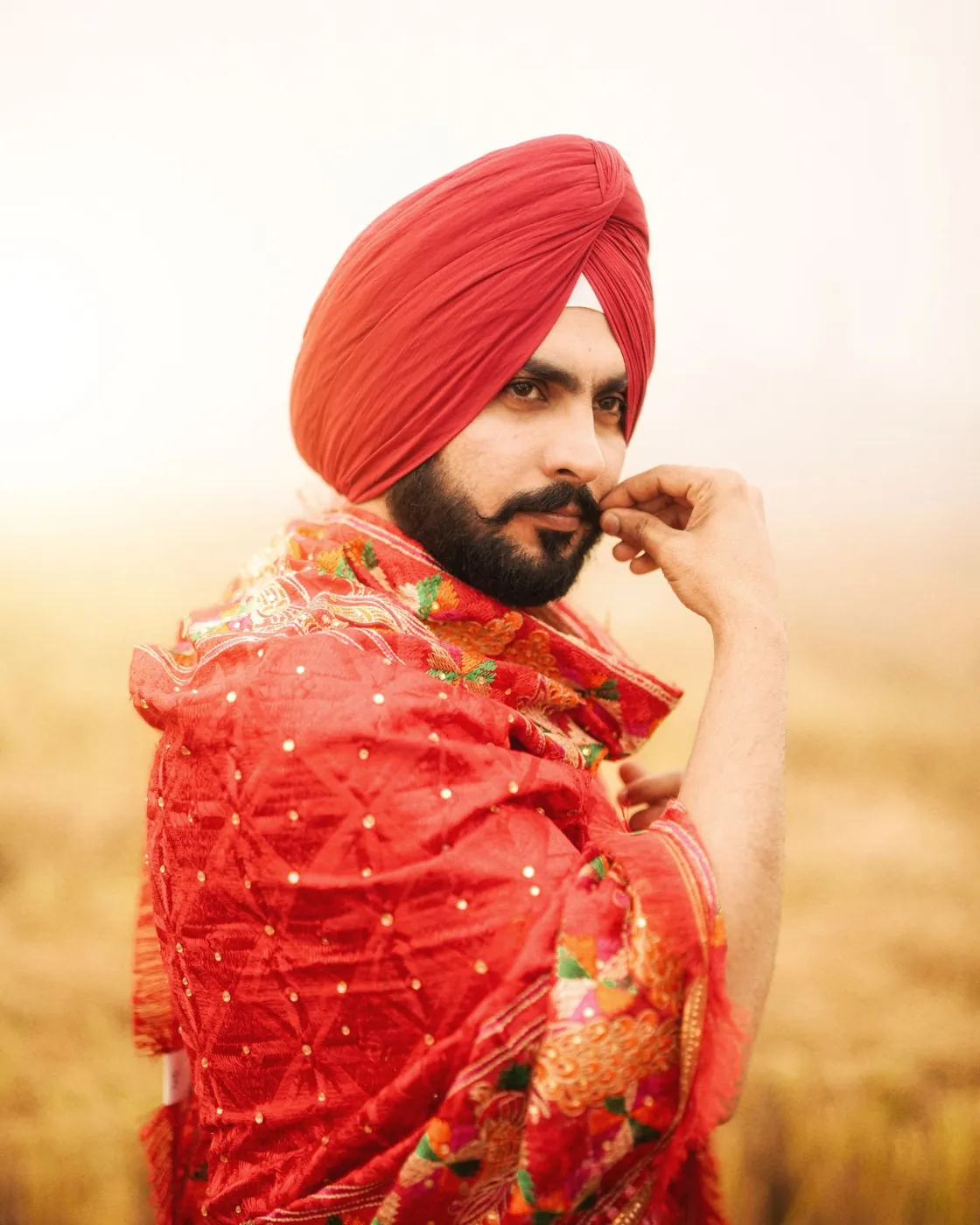
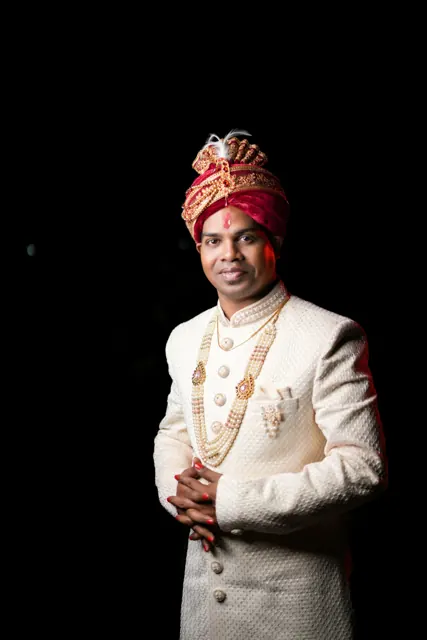
For a groom who ties a dastaar, the dastaar isn’t an accessory on top of the wedding look — it’s the centrepiece of it. Every photo from the milni to the Anand Karaj to the reception is built around the turban, which means groom grooming has to be planned around the dastaar from the start, not fitted in after.
Why the order of operations matters
A dastaar is tied tight, high on the head, and it stays on for hours — through the baraat, the pheras at the Anand Karaj, the milni photos and often the reception too. If grooming happens in the wrong order, one of two things goes wrong: either the skin work gets smudged or pulled while the turban is tied, or the tying disturbs grooming that was never designed to survive contact.
The sequence we use for grooms who wear a dastaar:
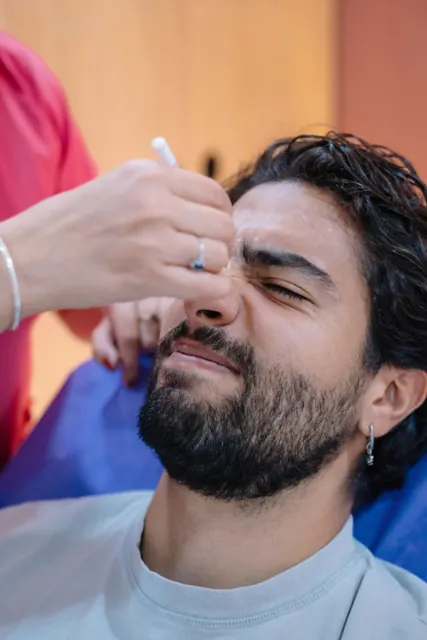
- Skin first, fully set. Cleanse, even out the tone, control shine with a matte finish that’s dry to the touch before anything else happens. A rushed, still-tacky base is the single biggest cause of marks on the inside of a dastaar.
- Beard and sideburns shaped and set, since the dastaar frames the face tightly at the temples and ears — any stray hair there is far more visible with a turban than without one.
- The dastaar goes on last, tied by the family’s turban-tier or at the studio, once skin and beard work is fully dry and set.
- Light touch-ups only after tying — blotting shine near the hairline, nothing that risks the fabric.
What actually gets groomed
Groom grooming for a dastaar wedding is still invisible in person and obvious in photographs — the same honest promise as any groom makeup we do. What’s different is where the attention goes:
- Forehead and temple line: this is the skin the dastaar borders directly, so it gets the most careful blending — no harsh edge where turban meets face.
- Beard: lined and conditioned, with special care at the point where the dastaar’s lower edge sits against the jaw, since that’s a close-up angle in almost every milni and phera photograph.
- Neck and ears: evened out, since a high-tied dastaar often exposes more of the neck and ear than a sehra does.
- Eyes: kept natural unless the groom wants more definition — most grooms who wear a dastaar we work with want the dastaar colour and the kalgi to be the statement, not the eyes.
Choosing a base that survives a long day
A Anand Karaj weddings day for the groom is long — gurdwara in the morning, baraat and milni, the Anand Karaj itself, then photographs and often a reception the same evening or the next. The base needs to handle sweat from dhol and dancing at the baraat, the warmth of a crowded gurdwara hall, and still photograph cleanly at the reception. We match the finish to this — usually a sheer, long-wear matte rather than anything that can slip or shine through hours of movement.
Coordinating colour without clashing
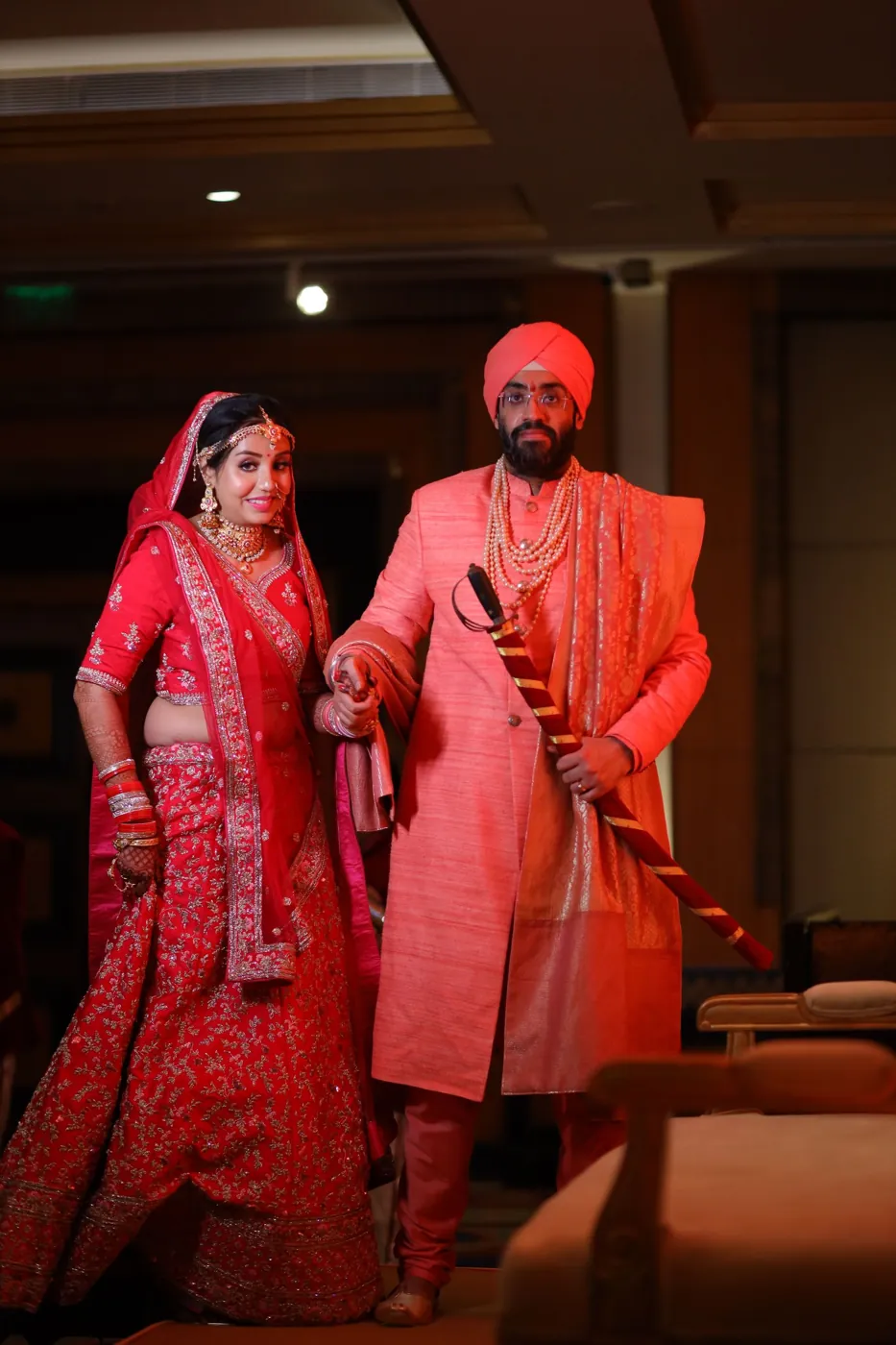
The dastaar colour is usually decided well before the wedding — often matching or deliberately contrasting with the bride’s lehenga, the sehra-equivalent kalgi, and sometimes the groomsmen’s turbans too. Our job on grooming day is simply to make sure skin tone, beard shape and the dastaar colour read as one considered look in photos, not three separate decisions. If you’re planning this alongside the bride’s colours, our packages page covers how we coordinate both sides of a couple’s look when booked together.
Timing it on the day
We usually arrive 60–90 minutes before the groom needs to leave for the gurdwara, finishing skin and beard work with enough time for it to fully set before the dastaar goes on. If a family turban-tier is coming separately, we time our part to finish just before they arrive, so there’s no waiting around in a half-finished state and no rushing the tie itself.
A note on what we don’t do
We don’t tie the dastaar ourselves unless specifically asked and experienced in the family’s particular style — turban-tying is a skill with real regional and family variation, and we’d rather work cleanly around a tier who does it the way your family wants than guess. What we do guarantee is that the skin and beard work underneath is ready for it, and stays looking fresh for however long the day runs.
If you’re planning grooming around a dastaar for an upcoming Anand Karaj, message us on WhatsApp through our contact page and we’ll plan the morning around your gurdwara and baraat timings.
Questions brides ask about this
Does the dastaar change how groom makeup is done?
Yes. We work around the tie, not under it — the base is set before the dastaar goes on, and we plan the hairline, sideburns and neck so none of it is disturbed once the turban is tied.
Can grooming be done after the dastaar is already tied?
Skin and beard work should happen first, with only light touch-ups after — pressing powder near a freshly tied dastaar risks marking the fabric or pulling it out of shape.
Should the groom get his dastaar tied at the studio or bring his own turban-tier?
Either works. If your family has a trusted turban-tier, we schedule our grooming to finish just before they arrive so the base is fresh and dry when the tying starts.