Skin & Hair · 5 October 2026
Maiyan and vatna: getting the glow without the turmeric stains
How the maiyan/vatna ritual affects bridal skin in the days before the wedding, and how to get the glow it's meant to give without patchy staining or irritation.
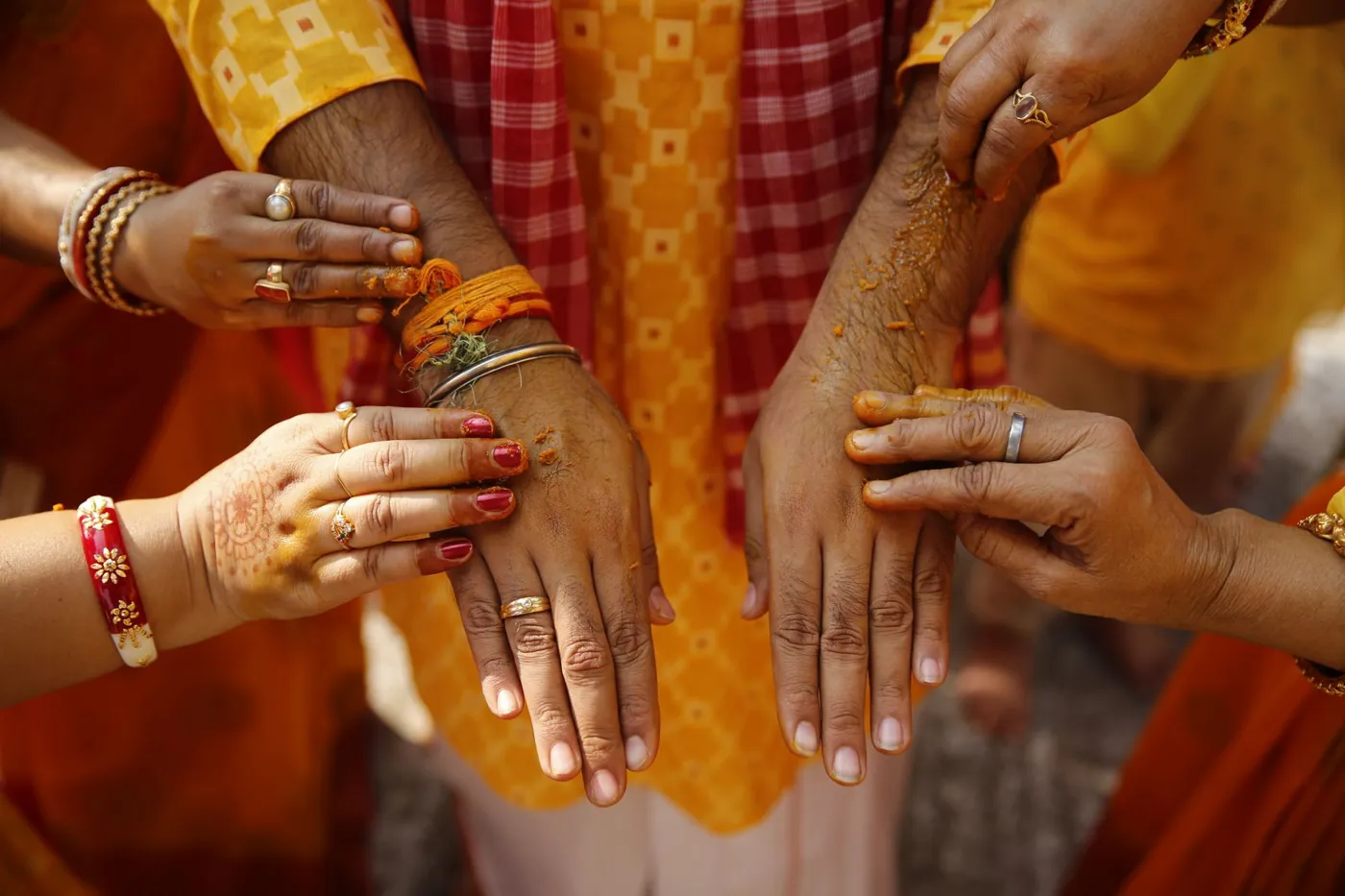
Of all the ceremonies in a Punjabi wedding, maiyan — also called vatna — is the one that actually touches the skin, literally, days before anyone touches up a base with foundation. Haldi, mustard oil, sometimes curd or sandalwood, worked into the skin by the women of the family while older songs play in the background: it’s one of the warmest rituals of the whole build-up, and it does genuinely do something for the skin. The trouble is the same paste that brightens also stains, and a bride who’s never dealt with turmeric on her face before can wake up on mehndi day wondering why her jawline looks patchy or her hands have gone faintly orange. None of that is permanent, and none of it should worry you — but a little planning makes the difference between glowing and blotchy by the time the camera comes out.
What vatna actually does to skin
Turmeric is a mild exfoliant and has long been used for its brightening, anti-inflammatory properties; mustard oil (or sometimes a lighter oil base, depending on the family’s version) moisturises and softens along with it. Applied over several days in the lead-up to mehndi and sangeet, the combination genuinely does lift dullness and leave skin softer — this isn’t just tradition for tradition’s sake. What it isn’t is instant. One application the night before the wedding won’t do much beyond a light tint; the glow people talk about comes from the daily or alternate-day ritual repeated over four to seven days, which is why most families start it around the time the mehndi and card distribution begins.
The stain is the trade-off. Turmeric sits in the top layer of skin and takes a day or two to fully fade on its own, faster on hands (which get washed more) than on the jawline and hairline, where paste tends to collect and dry. If your maiyan falls close to your bridal trial — which it often does, since both cluster in the same pre-wedding week — tell your artist in advance. A trial done right after a vatna session, before the tint has settled, can look different from how your skin will actually behave on the wedding day itself, which defeats half the point of doing a trial.
Getting the glow without the patchiness
A few things make the ritual kinder to your skin and to your makeup week:
Oil or ubtan first, water last. If your family’s version uses mustard oil as a base, let it sit for a few minutes before the turmeric paste goes on — the oil creates a slight barrier so the colour doesn’t grab unevenly into dry patches. Rinse with lukewarm water, never hot, which both strips the oil’s benefit and makes staining worse.
Don’t scrub it off. This is the single most common mistake. Scrubbing to get rid of yellow tint irritates the skin right when you need it calm, and can leave redness that takes longer to settle than the stain would have. Massage on a little raw milk, milk cream, or besan mixed with milk instead, in gentle circles, and let it lift the colour rather than forcing it.
Moisturise straight after, every time. Turmeric and repeated rinsing both pull moisture out of skin. A simple, fragrance-light moisturiser right after each session keeps the barrier intact — this matters more in a Jalandhar or Ludhiana winter wedding when the air is already dry, and less in a humid August one, but it’s worth doing either way.
Keep hairline and jaw in mind, not just the face. Paste tends to collect at the hairline and along the jaw and dry there, which is exactly where foundation needs to sit evenly later. A cotton pad with a little oil run along these lines after each session stops buildup before it becomes a stubborn patch.
Time the last session with the trial, not against it. If you can, schedule your final heavy maiyan two to three days before your bridal makeup trial rather than the same week as the wedding day base test. That gives any tint time to fully fade and gives your artist an honest look at your actual skin tone, the same one they’ll be working with on the day.
Why this matters for your makeup, not just your skin
A base is only as good as the canvas under it. Skin that’s dry, patchy, or carrying a faint yellow or orange cast needs more correction — more primer, more colour-matching, more time — than skin that’s simply prepped and hydrated. We see this most clearly with brides who’ve done vatna well: by the morning of the ceremony, their skin genuinely needs less product to look finished, because the groundwork is already done. It’s one reason we ask every bride about her pre-wedding rituals at the trial, alongside questions about HD versus airbrush finishes and how her skin tends to behave — maiyan is part of the same conversation as sun exposure, sleep, and the facials she may or may not be getting.
If your functions are spread across a few days — maiyan, then mehndi, then the Anand Karaj or pheras, then reception — it helps to think of your skin prep as a single week-long plan rather than isolated events. Our guide to the Punjabi wedding ceremony timeline walks through how each event’s look builds on the one before it, and vatna sits right at the start of that chain, quietly doing the groundwork for everything that follows.
Whichever city your functions are in — Jalandhar, Chandigarh, Ludhiana, Amritsar or further out — the ritual itself barely changes, though a muggy August vatna behaves differently on skin than a dry December one. If you’d like us to build your trial and wedding-day timeline around your actual function dates, including where maiyan falls, message us on WhatsApp through /contact/ and we’ll plan it properly rather than guessing on the day.
Questions brides ask about this
How many days before the wedding should maiyan start?
Most Punjabi families start maiyan four to seven days out, often daily or every alternate day leading up to the mehndi and sangeet. Shorter is fine too — even two or three applications give skin a lift, though the deeper glow builds with repetition.
How do I get turmeric stains off my face and hands fast?
Don't scrub. Massage on raw milk, besan, or a little milk cream in circular motions and rinse with lukewarm water — this lifts colour gently. Dish soap, lemon juice or hard scrubbing will irritate skin right before your trial. If a faint yellow tint remains on the hands, it usually fades within a day.
Can I still get HD or airbrush makeup if my skin is a bit uneven after maiyan?
Yes. A colour-correcting primer evens out any lingering tint or dryness before foundation, and we check for it specifically at the trial so wedding-day application isn't a surprise. Tell your artist if vatna is part of your functions so the base plan accounts for it.
Is vatna only for the bride, or should the groom do it too?
Both, traditionally — the groom's maiyan is usually simpler and shorter than the bride's, but the same turmeric-mustard oil base applies, and the skin-prep advice here works for him as well, alongside a grooming routine like a four-week checklist.