Planning · 16 September 2026
The Punjabi wedding makeup timeline: which look for which ceremony, from roka to reception
Roka, sagan, engagement, mehndi, haldi, sangeet, Anand Karaj or pheras, reception — a ceremony-by-ceremony guide to bridal looks, hair and timings for Punjabi weddings.
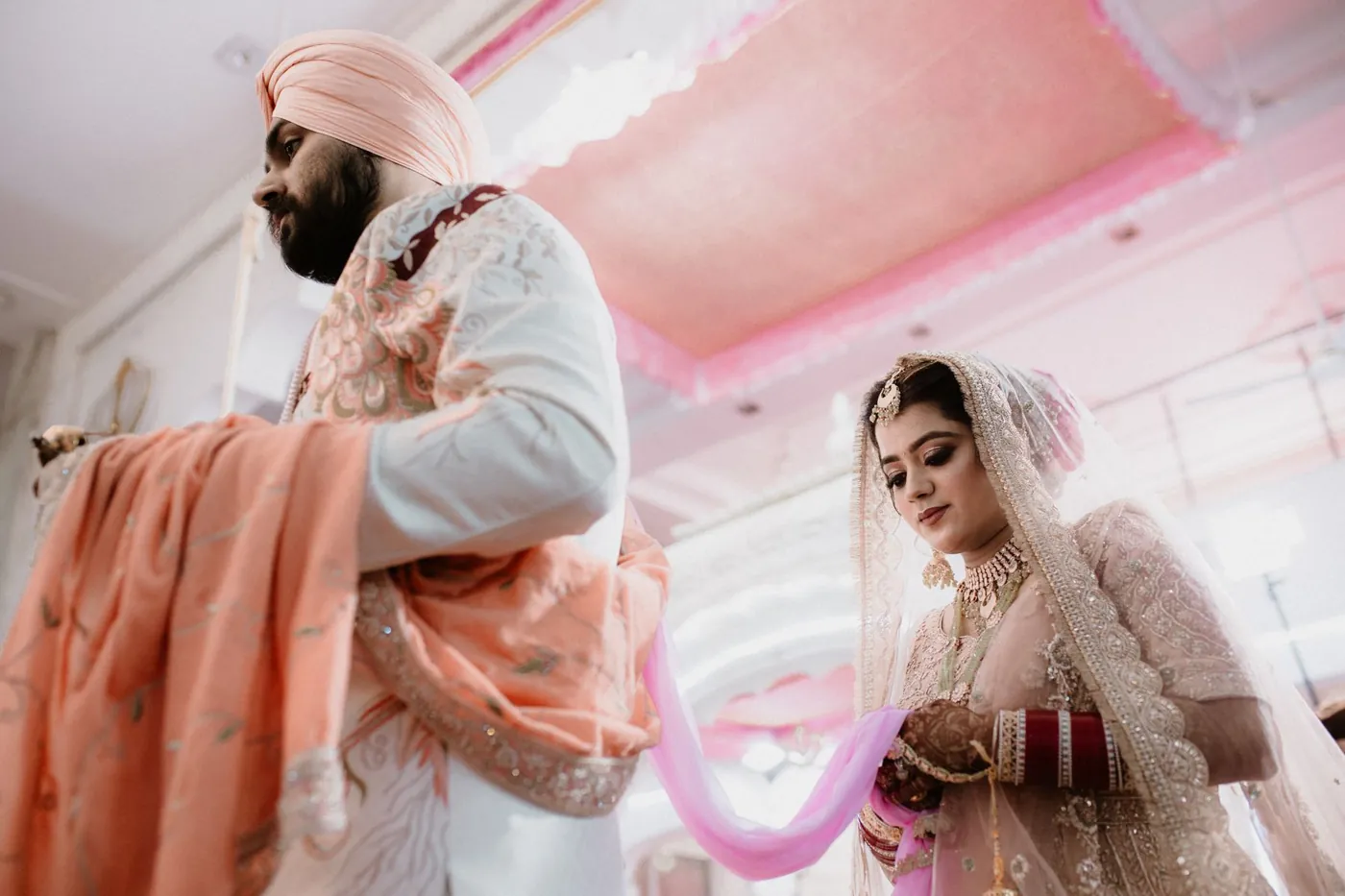
A Punjabi wedding is five to seven looks in a week, not one. Here is how we plan each one — the mood, the hair, the timing, and the mistakes to avoid.
Roka & sagan — “like you, on a very good day”
The first family function, usually daytime, often at home. Natural skin, soft defined eyes, a lip that matches the suit. Hair: soft open waves or a neat low bun. Allow 90 minutes. Mistake to avoid: going full-glam this early; it sets an exhausting bar for the week.
Engagement — soft glam
Ring ceremony, evening hall lighting, lots of close-up photos of the hands. Dewy skin, a shimmer lid, defined lashes, a sleek bun or a half-up style that frames the face. Allow two hours. Make sure the hands are prepped — moisturised, nails done — the ring photos are all hands.
Mehndi — dewy and festive
Afternoon, yellow and green outfits, florals, lots of movement. Light, dewy base; colour on the lips; open hair with fresh flowers or a floral braid. Keep the base light because you will be sitting with wet mehndi for hours and you will sweat. Allow 90 minutes. Mehndi note: do your hands first, then makeup — never the other way round.
Haldi — barely there
Haldi gets on everything. Minimal base (or none), waterproof mascara, a tinted lip, hair tied back or in a loose braid. A proper skin prep the night before means the turmeric comes off without staining.
Sangeet — glam that dances
The big night out. Long-wear base, strong eyes, lashes, a hairstyle that holds through giddha and bhangra — a secured braid or a pinned bun beats open hair every time. Allow two hours. Sweat-proof everything; set the base properly.
Anand Karaj / pheras — the look that lasts till the doli
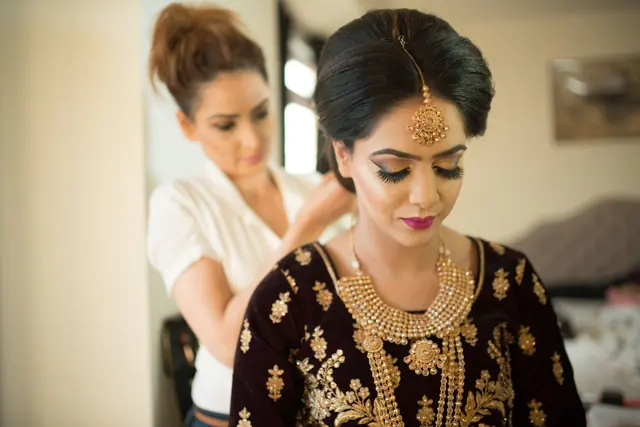
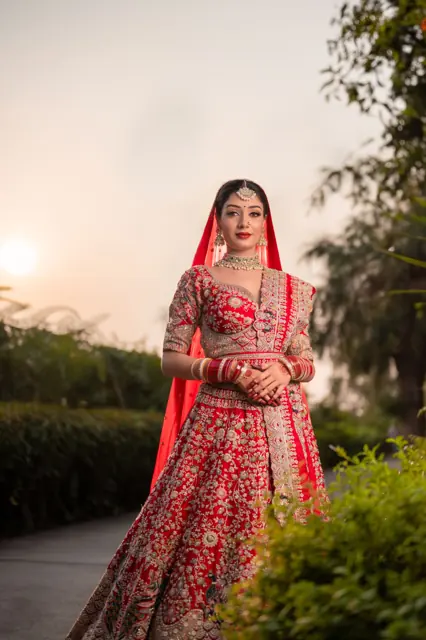
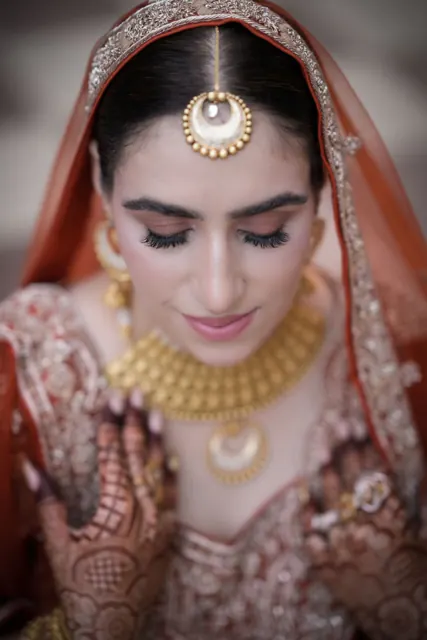
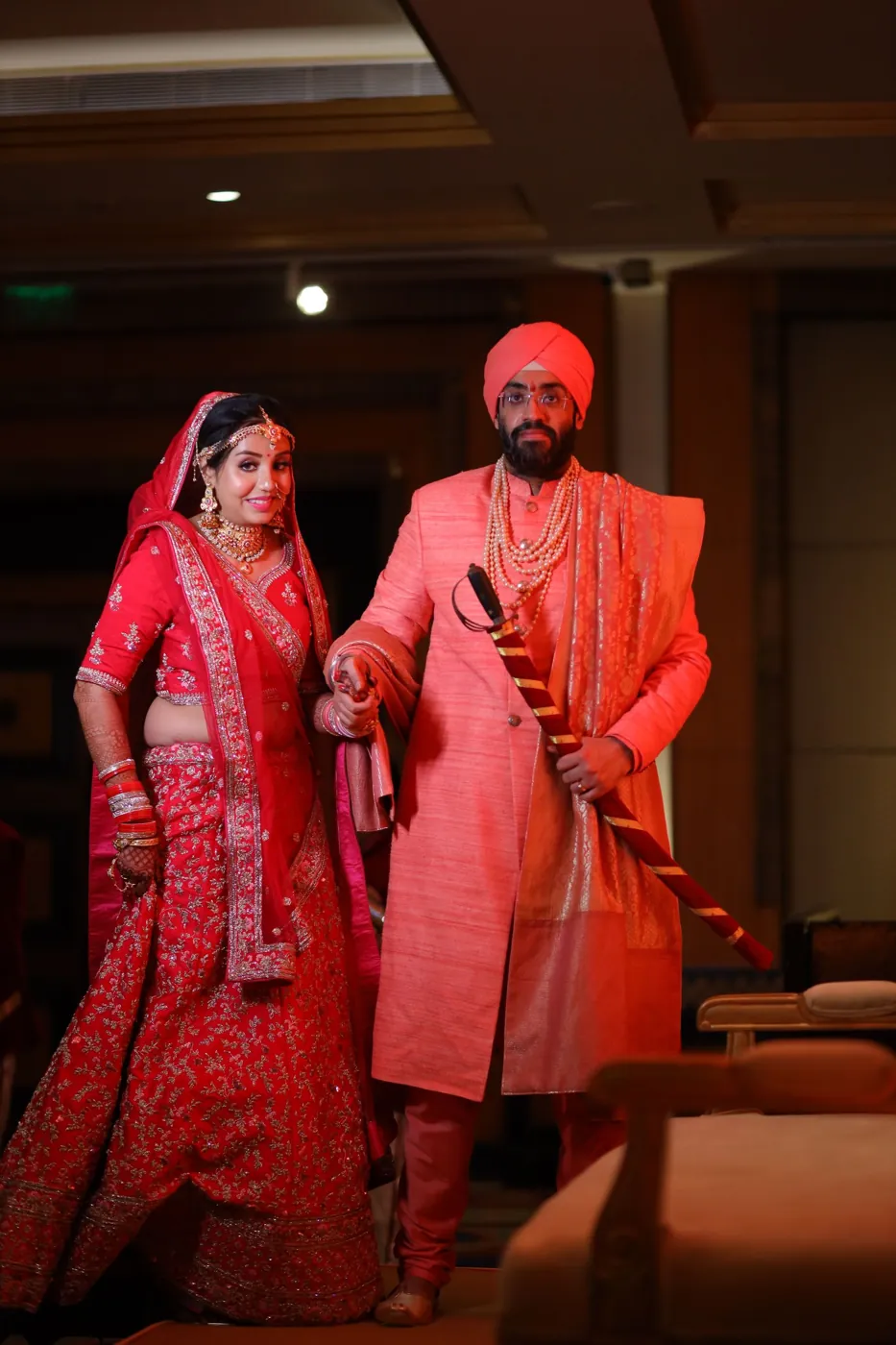
The earliest start and the longest wear. Classic tones — red, maroon, rust — a timeless eye (not a trend), modest-yet-glowing skin, and hair that can carry a heavy dupatta, kaleere and a maang tikka. Draping is pinned for matha tek and hours of sitting. Allow three hours and expect a 4–5 am start for a morning ceremony. Chooda goes on after the base is set. A standby artist for the doli refresh is worth it.
Reception — a new look, not a touch-up
Evening, flash photography, a completely different outfit. We take the morning look off and start again: sculpted skin, a bolder eye, a fresh lip, a new hairstyle. Allow two hours. Flash-test everything.
Putting it together
Book all the events in one go: the same artists learn your face and the looks stay consistent. At the trial we design the wedding-day look in full and map the others around it. And give yourself one evening in the middle of the week with no makeup at all — your skin will thank you on the morning that matters.
Questions brides ask about this
Do I need a different look for every event?
Each event has its own light, outfit and mood, so yes — but they should share a thread so the album feels like one story. A multi-event booking keeps the same artists for all of them.
What is the hardest event for makeup?
The wedding morning: the earliest start, the longest day and the heaviest outfit. Everything about that look is designed for endurance.
How many hours should I allow for each event?
Roughly three hours for the wedding morning (hair, makeup, draping), two for the reception, and 90 minutes to two hours for mehndi, sangeet and engagement.