Bridal · 6 October 2026
Choora and kaleere: how to set them so they last from ceremony to doli
Practical care for choora and kaleere through a long Punjabi wedding day — what damages them, how to protect the mehndi underneath, and how we work around them at makeup.
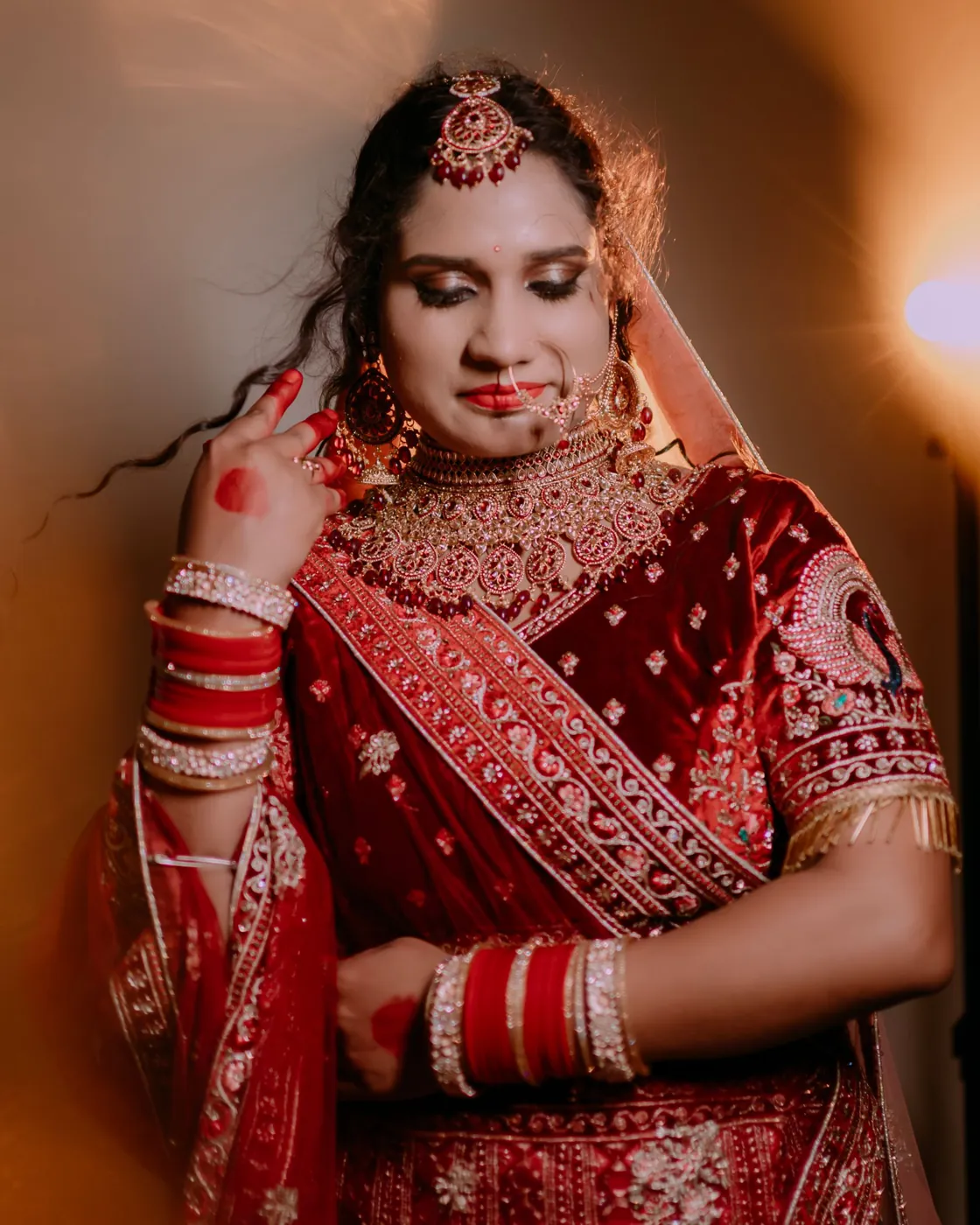
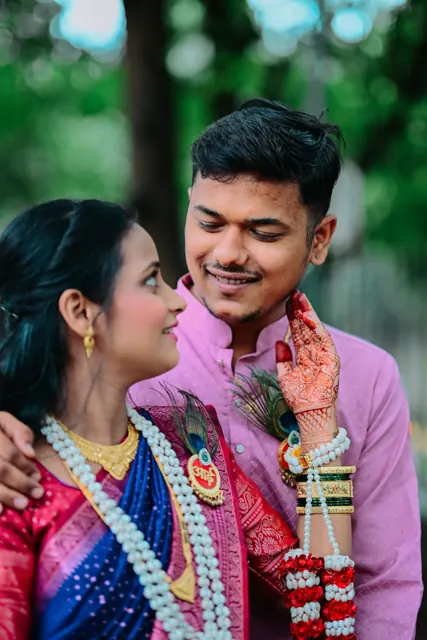
Somewhere between the chunni ceremony and the first dance at the reception, most Punjabi brides stop thinking about their choora and kaleere entirely — until a bangle catches on a dupatta, or a kaleera swings into the frame of a close-up shot at exactly the wrong moment. They’re two of the most meaningful pieces a bride wears all day, tied on by family with real ritual behind them, and also two of the most physically active parts of a bridal look: they move through every hug, every lagan-dance turn, every hand someone grabs for a photo. Getting them to survive roka-to-doli in good shape, and look right in every photo along the way, takes a little more thought than people expect.
What actually damages a choora over a long wedding day
The choora itself — the stack of bangles, usually red and white or red and ivory, sometimes with gold accents — is more durable than it looks, but a few things do wear on it over twelve-plus hours of functions. Repeated contact with hard surfaces (gripping a car door, leaning a wrist on a table edge during the reception dinner) can chip lacquered or painted bangles faster than you’d think. Heavy hand movement during bhangra or giddha at the sangeet or reception is actually fine for a well-fitted choora — it’s designed to be danced in — but a choora that’s slightly too loose will knock against itself constantly and chip faster than one sized correctly.
The bigger practical issue is sizing, not toughness. Hands and wrists swell a little over a long day, especially in a Jalandhar or Ludhiana summer wedding with standing through pheras in the heat, and a choora fitted perfectly cold in the morning can feel tighter by evening. Get it fitted with this in mind — snug enough not to slide over the knuckle on its own, loose enough to allow for some swelling — rather than fitting it first thing in the morning and assuming it’ll feel the same at the reception.
Kaleere: the part that moves the most
Kaleere are hung from the choora, traditionally gifted and tied on by the bride’s maternal side, and they’re the part most likely to need adjusting through the day simply because they swing. A few things help:
Have them tied snugly, not just decoratively. A kaleera that’s loosely looped can slip down and tangle with choora bangles or catch on dupatta fabric. Ask whoever ties them to secure the cord properly — it should swing freely from the wrist, not drag or catch.
Mind them during the giddha and bhangra. This is when kaleere see the most movement, and also when they look best in photos and video — the swing is part of the charm. The only real risk is a kaleera catching on another dancer’s dupatta or jewellery mid-turn; most brides and their sisters learn to angle hands slightly outward during fast turns without even thinking about it by the second song.
Take them off for the parts where they’d get in the way. Many brides remove kaleere before sitting down to eat at the reception, or before a particularly structured photo sequence, and have a sister hold them. There’s no rule against this — kaleere aren’t meant to survive every single hour glued on, and removing them for ten minutes during dinner protects both the kaleere and your sleeves.
Keeping choora and kaleere working with your makeup and hands, not against them
At the trial and on the day, we factor the choora into hand and mehndi positioning for photos — a camera-ready hand pose looks different with a full choora and kaleere stack than with bare wrists, and a good photographer will already be thinking about this, but it helps if your artist and mehndi artist are coordinating too. If your mehndi goes right up past the wrist, make sure the choora ceremony happens after the paste is off and the stain has darkened, not while it’s still wet — fresh paste under bangles smudges and can leave uneven patches.
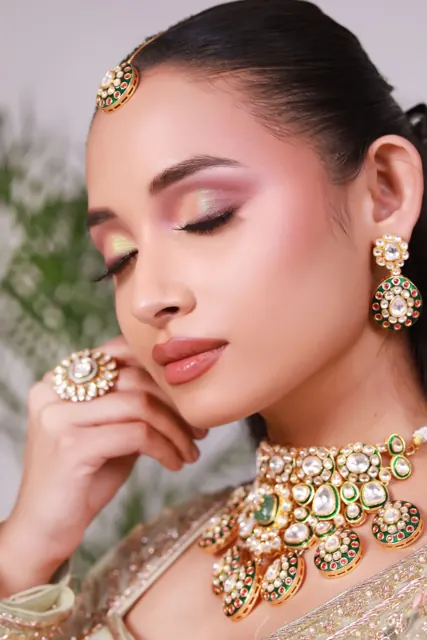
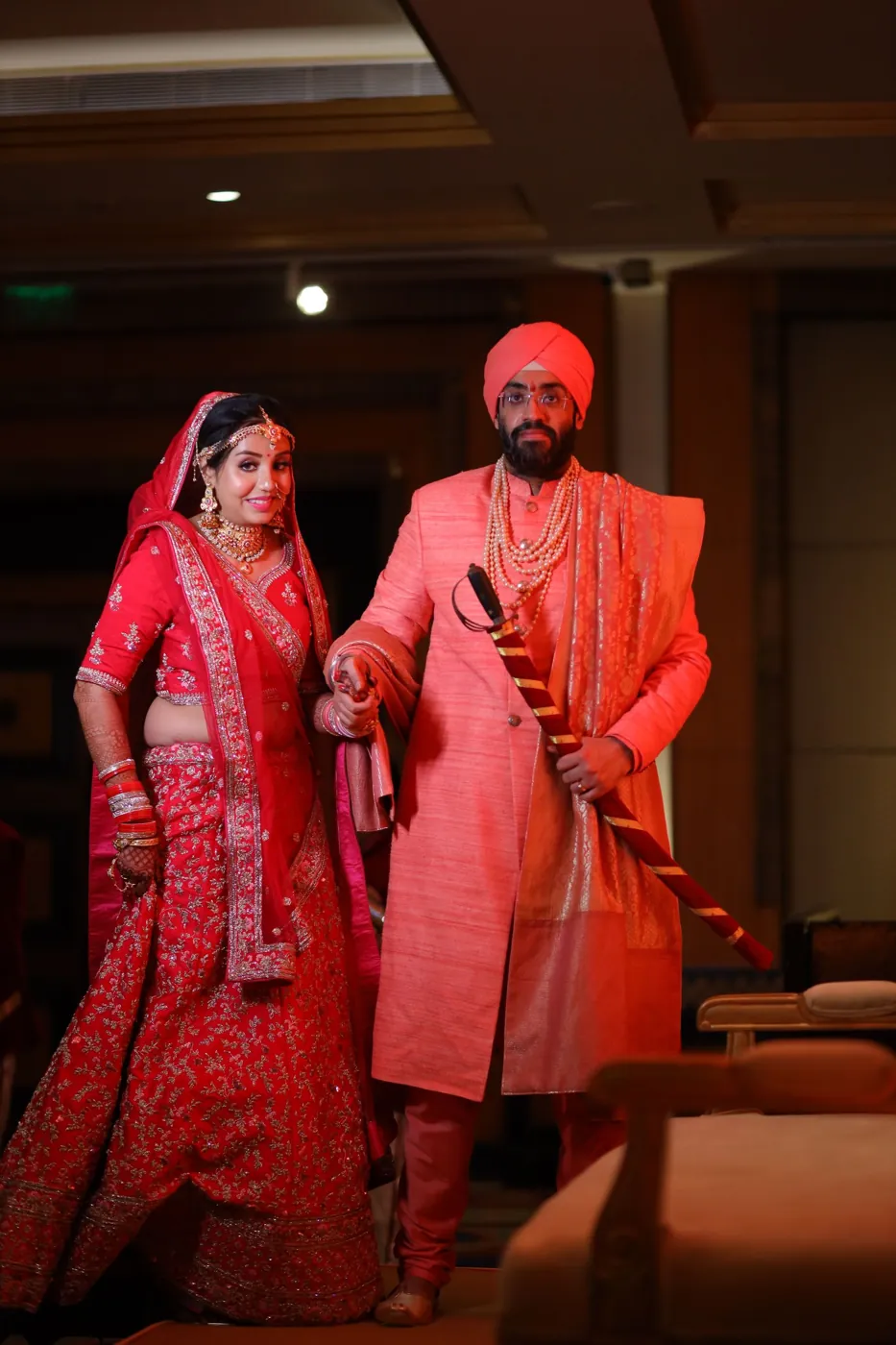
We also build choora and kaleere into the overall look the same way we think about matching eyes and lips to your lehenga colour — red and white choora reads differently against a maroon lehenga than against ivory or pastel, and gold-accented kaleere can echo a matha patti or tikka if someone’s paying attention to the whole picture rather than face alone. None of this needs to be complicated; it just needs fifteen minutes of conversation at the trial so nothing’s a surprise on the day.
If you’re planning your full wedding-day sequence — mehndi, choora, Anand Karaj or pheras, reception — and want your hands, mehndi and jewellery all timed sensibly instead of rushed between functions, message us on WhatsApp through /contact/ and we’ll help you map the order that works best for your specific day.
Questions brides ask about this
How many days before the wedding should I wear the choora so it's settled in by the ceremony?
The choora ceremony itself usually happens the morning of or a day before the wedding, often alongside or just after mehndi, so there's little time to 'break it in' beforehand. What matters more is sizing — have it fitted a few weeks earlier so it sits snugly but isn't so tight it digs in once hands swell slightly from heat or standing through a long pheras.
Will mehndi colour come off onto the choora or vice versa?
The choora itself won't stain your mehndi, but fresh mehndi paste can transfer faint colour onto pale bangles if you put the choora on before the paste has fully dried and been removed. Most families do choora after mehndi has set and been scraped off, which avoids this. If your order is reversed for any reason, keep a cloth between skin and bangle until the paste is gone.
Can kaleere be worn with any outfit, or do they need a specific lehenga style?
Kaleere work with most bridal silhouettes, but very fitted or cape-sleeve outfits can make them bump awkwardly against embroidery or stitching during photos and the giddha. If your lehenga has structured sleeves or a close-fitting bodice, mention it when you're finalising kaleere size so your sisters can adjust how they're tied.
What's the actual difference between choora and kaleere?
Choora refers to the set of bangles — traditionally red and white or red and ivory — worn by the bride; kaleere are the decorative hanging ornaments tied to the choora, traditionally gifted by the bride's maternal uncle and aunts. The choora stays on for weeks after the wedding by custom; kaleere are usually worn only through the wedding day and immediate functions, then removed and kept.