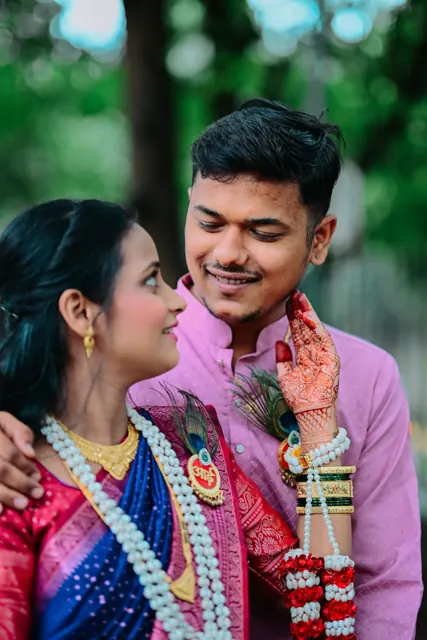
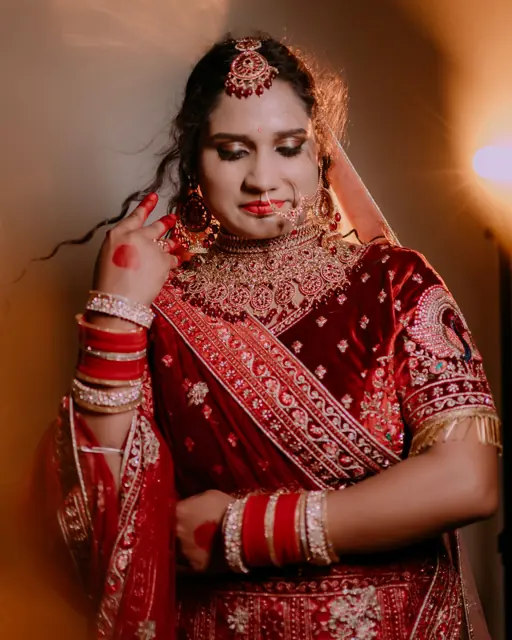
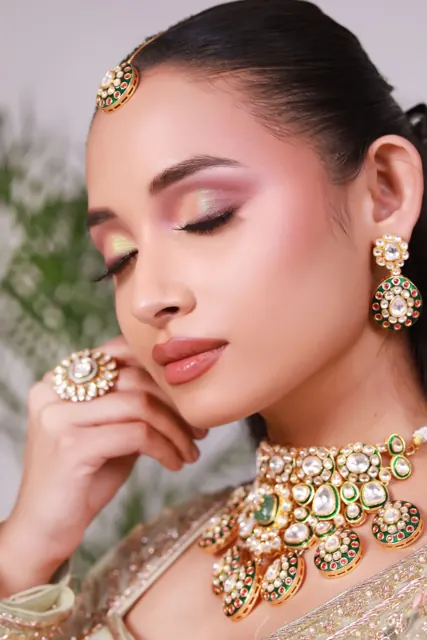
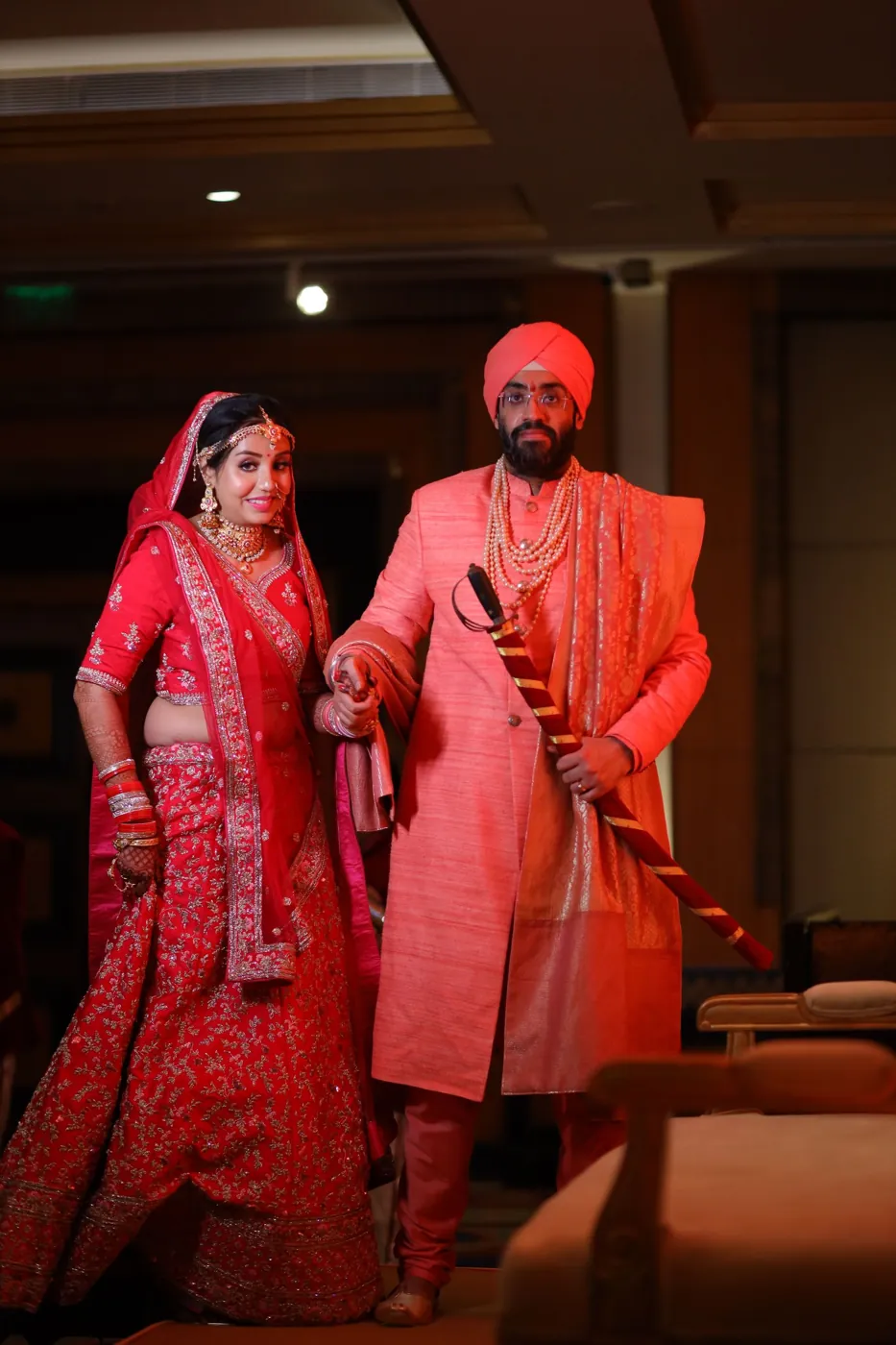
Bridal · 8 October 2026
Jaggo night makeup and hair for the bride and her sisters
Jaggo means dancing with a decorated pot on your head for hours after dark. Here's how we plan makeup and hair for the bride's side so it survives the whole night.
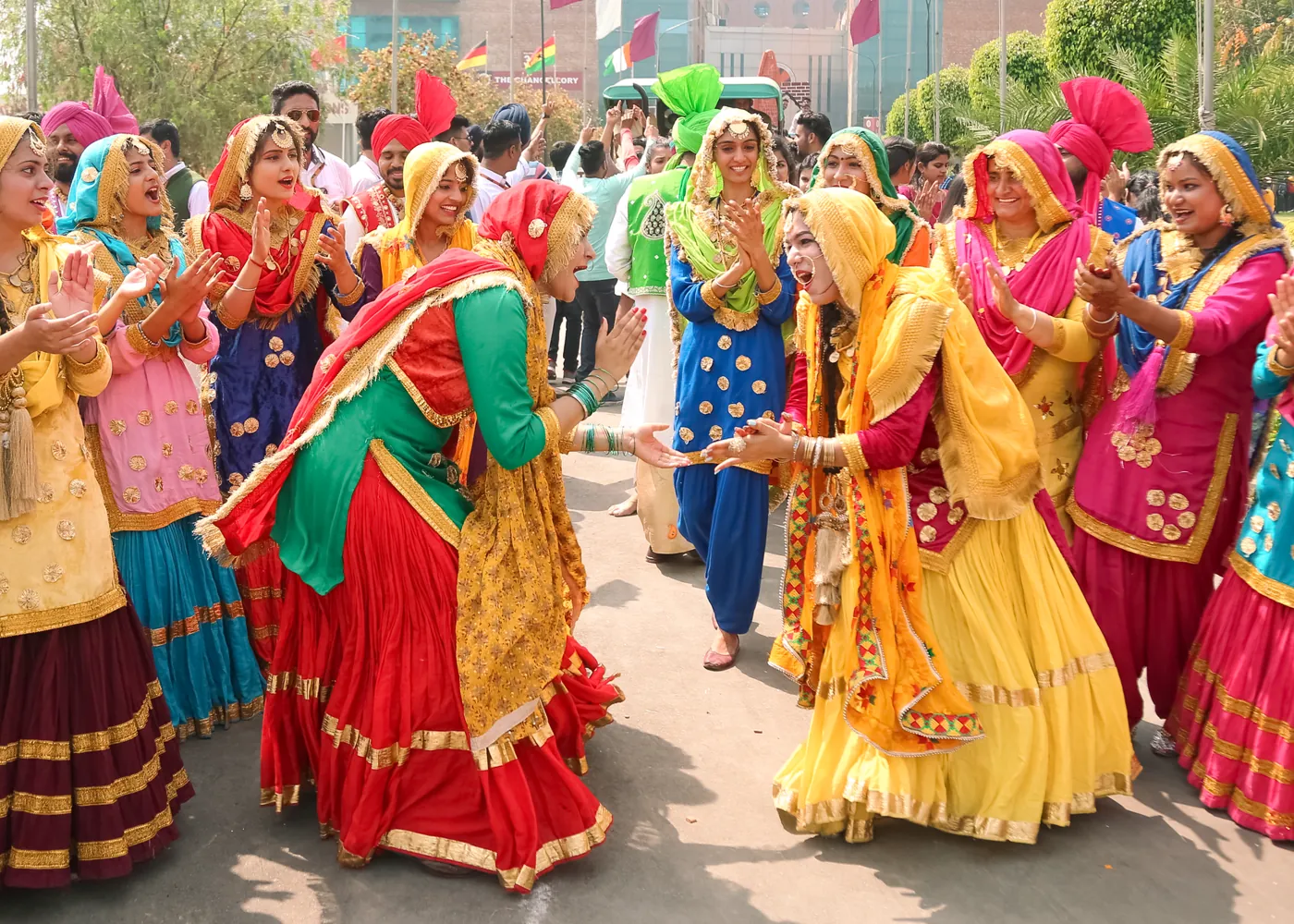
Jaggo is one of the most physical nights of a Punjabi wedding week, and it rarely gets the planning attention that mehndi or the actual wedding day does. The bride, her sisters, cousins and close friends walk through the neighbourhood or gather at home singing jaggo songs, balancing a decorated gaggar (brass pot) or jyoti on their heads, dancing giddha late into the night before the wedding. It’s loud, it’s joyful, and it’s also the function most likely to wreck a makeup look that wasn’t built for it — because nobody sits still at jaggo.
If you’re mapping out your Jalandhar, Ludhiana or Amritsar wedding week and jaggo is on the calendar a night or two before the big day, it’s worth thinking about makeup and hair for this function separately from the rest, rather than treating it as a smaller version of the wedding look.
Why jaggo makeup needs its own plan
Most pre-wedding functions involve some sitting, some standing, some photos — jaggo involves constant movement for hours, often with a pot balanced on the head, which changes how a hairstyle needs to be anchored and how much weight a base can carry before it starts to shift. Add in that jaggo often happens outdoors or half-outdoors in the evening — courtyards, terraces, sometimes a short walk through a gali — and you’re dealing with night air, occasional dust, and warmer body temperature from dancing, all at once.
The function also usually falls close to mehndi or sangeet in the calendar, sometimes the same night, which means skin is already carrying a few days of back-to-back functions by the time jaggo arrives. A look that’s too heavy compounds that tiredness in photos; something fresher tends to actually look more alive on camera, not less.
A makeup approach that survives hours of dancing
For the bride and her side at jaggo, we generally lean toward:
A lighter base, properly set. Full-coverage, full-glam bases are better saved for the wedding day when the bride is mostly seated or walking in a controlled sequence. For jaggo, a medium-coverage base with good setting powder in the right places — T-zone, under the eyes, along the hairline where a dupatta or pot might sit — holds up far better through real movement and heat than a heavy base layered thick and hoping it stays.
Eyes and brows that read from a distance. Jaggo photography and video is often taken mid-movement, under string lights or whatever ambient lighting the street or courtyard has, rather than in a controlled studio setup. Well-defined brows and a clean eye shape carry a look in those conditions better than fine detail work that only shows up in a close, still shot.
A lip colour that can be reapplied in thirty seconds. With singing, eating, and hours of dancing, lip colour doesn’t last the way it might sitting through an Anand Karaj or pheras. We usually recommend a bullet or stain in the bride’s chosen shade that a sister can hold and hand back for quick touch-ups, rather than trying to make one application last the whole night.
Sweat-aware setting, especially for a late-spring or summer jaggo. If your wedding week falls in a warmer month, treat jaggo like you would treat summer wedding makeup more generally — setting spray, a light dusting of powder before the function starts, and skipping anything heavily cream-based that can slip with body heat and movement.
Hair that holds a pot and still looks intentional
The gaggar or jyoti balanced on the head during jaggo isn’t heavy, but it does need a stable base to sit on, and a hairstyle that’s all loose waves and soft volume won’t give it one. We usually build jaggo hair around a style with real structure underneath — a braided crown, a secured low bun, or a style with a flat, pinned section at the crown specifically to give the pot a stable spot to rest.
From there, the rest of the style can still look soft and celebratory — loose face-framing pieces, a floral or jewelled accent, even a half-up style with movement in the lower half — as long as the top section is secured properly. This is the same logic we use for hairstyles that need to survive a full sangeet of bhangra and giddha: build the hold in first, then let the decorative elements sit on top of something that isn’t going anywhere.
Coordinating the bride’s side without copying the bride
Jaggo is as much about the bride’s sisters and cousins as it is about her — they’re the ones actually carrying the pots and leading the giddha formations most of the night — so it helps to think about the group look, not just the bride’s face. We usually suggest everyone in the group work within the same colour family and similar makeup intensity so photos feel cohesive, while giving the bride one element that’s clearly hers: a slightly bolder lip, a statement earring, or a dupatta colour that sets her apart in a sea of matching outfits.
This keeps group shots looking planned rather than mismatched, without anyone accidentally outshining the bride on a night that’s meant to celebrate her as much as it celebrates everyone dancing around her.
If you’re putting together a makeup and hair plan for jaggo alongside mehndi, sangeet and the wedding day itself, message us on WhatsApp through /contact/ and we’ll help you map a schedule where every function gets a look suited to what it actually involves — not a scaled-down version of the wedding day.
Questions brides ask about this
Can I get full bridal makeup done for jaggo, or is that overdoing it?
Most brides skip full bridal-weight makeup for jaggo and save it for the wedding day itself. A fresher, dewier version — base, defined eyes, a strong lip, less layering overall — photographs just as well under night lighting and holds up far better through hours of dancing, since jaggo is physically one of the most active functions of the whole week.
What's the single biggest makeup mistake brides make for jaggo?
Wearing the same heavy, full-coverage base they're planning for the wedding day. Jaggo involves real movement, often outdoors or in a courtyard, and a thick base that hasn't been set properly will crease and slide faster than it would sitting through pheras. Lighter layering with good setting technique outlasts heavy product every time.
How do you keep hair secure through hours of jaggo dancing without it looking stiff?
We build the style around pins and a strong base rather than spray alone — a braided or pinned foundation holds shape even as strands loosen from movement, so the look still reads as intentional two hours in. A style that depends mostly on hairspray tends to flatten or frizz the moment real dancing starts.
Should the bride's sisters match her makeup look for jaggo, or just coordinate?
Coordinate rather than match — similar intensity and a shared colour family (say, everyone in warm golds and berries, or everyone keeping it dewy and soft) reads well in group photos without anyone looking like they copied the bride. We usually suggest the bride keep one small distinguishing element, like a bolder lip or a statement earring, so she still stands out in a group shot.